
Golden Eagle Festival: inside Mongolia’s epic tradition
Ever feel like the legendary golden eagle festival is just a distant dream on your social media feed because planning a trip to the wild, remote Altai Mountains seems totally overwhelming? You’re definitely not alone, so we’ve put together a no-nonsense guide that covers the real history, the best travel tips, and the truth about the famous eagle hunters versus the tourist traps. Stick around to uncover the specific details that will help you finally swap your phone screen for the freezing Mongolian wind and the raw thrill of the hunt. 🦅 If you already visited Raven Rock State Park, seen Niagara falls conservation efforts or it’s not the best month to go to Great Barrier Reef, we loudly recommend you to consider a trip in Central Asia to attend the Golden Eagle Festival in Mongolia. For sure, it will be the most uncommon trip ever!
Golden Eagle Festival in Mongolia Article Takeaways
Here is a summary of this article dedicated to the Golden Eagle Festival in Mongolia.
What It Is: The Golden Eagle Festival is an annual celebration of Kazakh heritage held in western Mongolia’s Bayan-Ölgii province. Despite being a modern creation (started in 2000), it preserves the ancient art of hunting with golden eagles through competitive demonstrations by Berkutchi (eagle hunters).
The Experience:
- Main Events: Opening parade with traditional costumes, eagle hunting competitions (speed, agility, recall), and traditional Kazakh games (horseback tug-of-war, archery, camel races)
- When: Main festival in early October near Ölgii (largest, 70-80 hunters); smaller Sagsai festival in mid-September (more intimate, ~40 hunters)
- Duration: Two-day event
Essential Planning Information:
- Location: Festival grounds 7-14 km outside Ölgii city, Bayan-Ölgii province (extreme western Mongolia)
- Getting There: Fly from Ulaanbaatar to Ölgii—domestic flights are extremely limited and sell out months in advance
- Accommodation: Book hotels, tourist ger camps, or family homestays well ahead; capacity is severely limited during festival season
- Crowd Reality: Expect heavy tourist presence and intense competition for photo spots during key moments
- Important: Verify exact dates annually before booking—they shift each year
Bottom Line: This is a legitimate cultural experience with real heritage, but plan aggressively or risk missing out entirely.
Golden Eagle Festival in Mongolia Article Table of Content
- What Is the Golden Eagle Festival? The Essential Facts
- The Bond Between Hunter and Eagle
- Inside the Festival: A Spectacle of Skill and Tradition
- A Living Tradition in a Modern World
- Planning Your Trip to the Festival
What Is the Golden Eagle Festival? The Essential Facts
A Celebration of Kazakh Heritage in Mongolia’s Altai Mountains
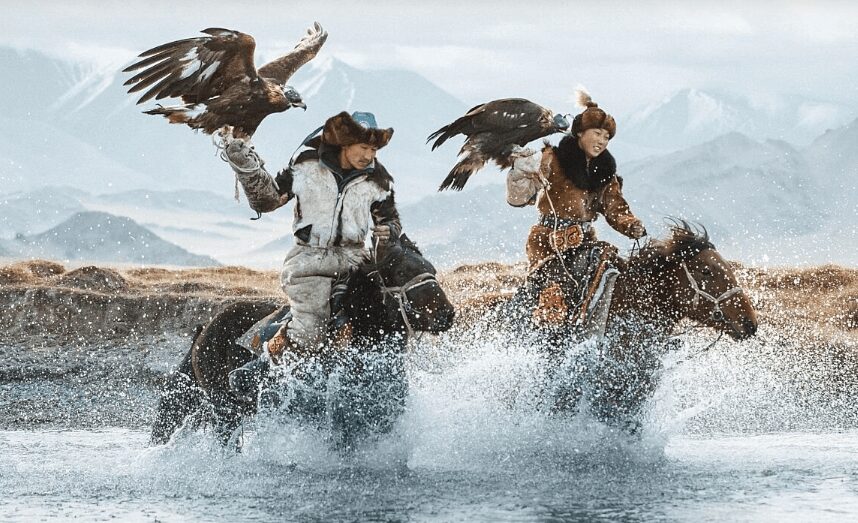
The Golden Eagle Festival stands as a profound annual celebration of Kazakh heritage. Surprisingly, this tradition thrives in western Mongolia, not Kazakhstan. It is a distinct cultural anomaly you simply have to see.
You will find this spectacle in the Bayan-Ölgii province, right in the heart of the Altai Mountains. Its core mission is preserving the fading, ancient art of hunting with golden eagles. This isn’t just tourism; it is living history. The mountains provide a dramatic, rugged backdrop for the action.
The Association of Mongolian Eagle Hunters organizes everything to aggressively highlight their unique culture. They refuse to let these traditions die out quietly.
When and Where: The Main Festivals
The main festival is the undisputed heavyweight, drawing the biggest crowds. It kicks off annually in October near the dusty city of Ölgii. Everyone wants to be at this specific, high-energy event.
For a raw experience, consider the smaller, more intimate festivals like Sagsai. These gems take place in September, offering a closer look. You get less noise and more tradition.
Exact dates shift annually, so never book flights blindly. You must verify the calendar for 2026 or 2027 to avoid missing the opening ceremony.
The Festivals at a Glance
This breakdown summarizes the key differences between the major events. It is the fastest way to decide which experience matches your expectations. Use this to avoid a planning disaster.
| Feature | Main October Festival (Ölgii) | September Festivals (e.g., Sagsai) |
|---|---|---|
| Timing | Early October | Mid-September |
| Scale | Largest event, major tourist draw | Smaller, more intimate atmosphere |
| Participants | Up to 70-80 eagle hunters | Around 40 eagle hunters |
| Vibe | Highly competitive, large crowds | Popular with photographers, more focused |
| Booking | Book flights and accommodation months in advance | Slightly more flexible, but booking ahead is still wise |
The Bond Between Hunter and Eagle
So, you get the setting. But the real magic happens between the master and the bird.
The Berkutchi: More Than Just Hunters
You really can’t ignore the eagle hunters, known locally as Berkutchi. They are the living pillars of Kazakh identity here in the Altai Mountains of Mongolia. This isn’t just a hobby. It is a sacred legacy passed strictly from father to son.
Training kicks off when kids are just 9 or 10 years old. They must build a deep trust with the bird. That connection is the absolute heart of this practice.
Being a Berkutchi means more than just hunting foxes. They act as the fierce guardians of a fragile, ancestral know-how.
The Magnificent Golden Eagles
Now look at the real stars, the Aquila chrysaetos. Hunters almost exclusively choose female eagles. They are simply bigger and much more aggressive killers.
- Primarily females: They are larger, heavier, and considered more aggressive hunters.
- Impressive wingspan: Typically ranging from 1.8 to 2.5 meters.
- Lifespan: They can live for 20-30 years, but are usually hunted with for 6-7 years.
- The hood (tomaga): A special leather hood is used to keep the eagle calm and focused.
- A ceremonial release: After their years of service, many eagles are traditionally released back into the wild.
A New Generation: The Rise of the Eagle Huntress
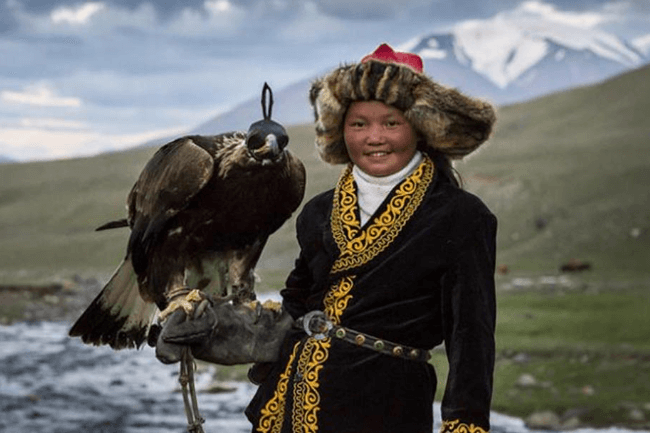
Forget the old idea that this is strictly a man’s game. Women are crashing the party and changing the rules. Teenage girls now compete alongside the veterans. They are even taking home the top prizes.
You have probably heard of Aisholpan Nurgaiv. She became a global icon after the 2016 documentary « The Eagle Huntress ». Her massive success inspired a whole new wave of young girls.
This shift proves the tradition is evolving to survive. It is clear in Aisholpan’s participation that the future is bright.

Inside the Festival: A Spectacle of Skill and Tradition
So, what actually happens concretely during these two days? It is a mix of fierce competition and cultural celebration.
The Opening Parade: A Display of Pride
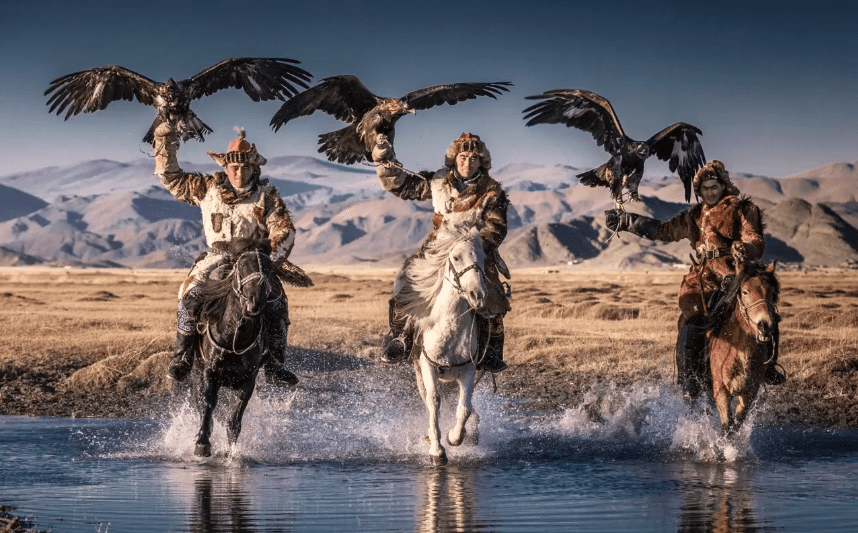
The festival kicks off with a massive parade of hunters on horseback. They wear their finest traditional costumes, looking like they stepped out of history. It is an incredible sight to witness.
But don’t be fooled, this isn’t just for show. Judges are already scoring the quality of their attire and the intricate ornamentation of the horse. Every single detail actually counts here.
For these participants, presenting their eagle and heritage is a moment of immense pride. You can feel the heavy weight of tradition hanging in the air.
The Main Competitions: Testing the Eagle’s Prowess
Next, we get to the heart of the action where the bond is tested. The connection between the hunter and the eagle is put under serious pressure here. It gets intense.
- Eagle’s agility and speed: Eagles are tested on their ability to attack a moving bait (often a stuffed fox skin) dragged by a horse.
- The call: A hunter calls their eagle from a distance. The bird, released from a hilltop, must locate its master and land precisely on their arm.
- Grip and strength: Competitions may test the eagle’s ability to grip and hold onto a weighted item.
Beyond the Eagles: Traditional Kazakh Games
The festival isn’t just about the birds, though. It serves as a complete complete showcase of nomadic Kazakh culture, featuring intense equestrian games. You see skills that have survived for centuries. It is raw and real.
You have to see the Kykbar, a tug-of-war played on horseback over a goat skin. It is a brutal, impressive display of strength. The crowd absolutely loves this wild chaos.
There are also camel races, archery, and games like Kyzbular, a chase on horseback. It’s non-stop action that proves these riders are truly elite. You won’t get bored here.
A Living Tradition in a Modern World
But behind the colorful spectacle lies a more complex reality. This festival isn’t as ancient as you might think.
A Recent Creation to Preserve an Ancient Art
Most people assume this event dates back to Genghis Khan or ancient times. Wrong. It actually kicked off in 2000. That’s right, this specific gathering is a modern invention, designed to save a dying art before it vanished completely.
The organizers realized the culture of eagle hunting was fading fast. They needed a way to make it cool again for the younger generation who were drifting away to cities.
Let’s be honest, tourism was the other big driver from day one. They wanted to pump cash into the local economy.
The Double-Edged Sword of Tourism
Here is where it gets messy. While the hype saves the practice, academics are sounding the alarm about commercialization. If we aren’t careful, we risk turning a deep cultural ritual into a cheap show for Instagram likes.
The fear is real. We might end up with a hollow tourist demonstration that has zero connection to the gritty reality of surviving a brutal Mongolian winter.
Worse, some folks might start using captive-bred birds just for the festival. This shift has transformed falconry into a tourist demonstration rather than a wild, natural partnership.
The Future of Eagle Hunting
Active hunting has tanked, and not just because of modern life. Severe prey depletion like foxes, combined with easier tools like rifles, made the old ways inefficient. Why train a bird when a trap works faster?
Even the sacred rule of « catch and release »—sending the eagle back to the wild after a few years—is being ignored. That cycle is breaking down.
Yet, without this festival, the knowledge dies. It’s imperfect, sure, but it plays a role ensuring the know-how doesn’t disappear completely while the world changes around it.
Planning Your Trip to the Festival
So, are you convinced? If the idea of seeing this with your own eyes tempts you, here is some practical information to know.
Getting There and Getting Around
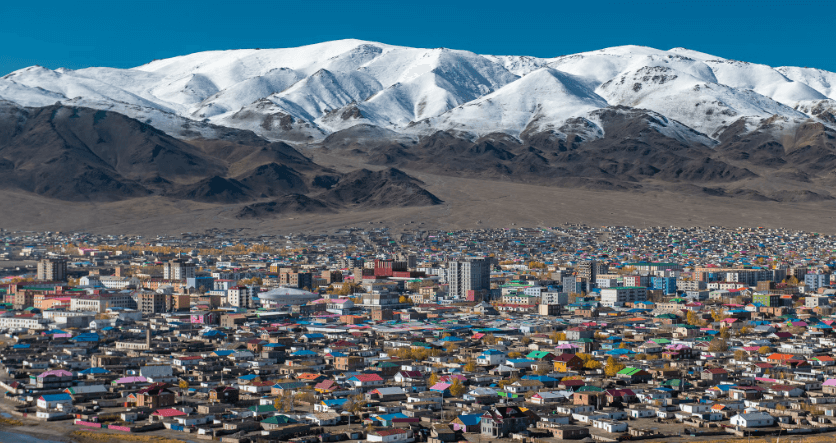
Your entry point is the town of Ölgii, located in the Bayan-Ölgii province, sitting in the extreme west of Mongolia. It acts as the primary gateway to this rugged region.
Here is the catch that ruins many plans: domestic flights to Ölgii are limited and fill up instantly for the October festival. Early booking is absolutely non-negotiable if you want to make it there. You risk missing out entirely if you hesitate.
Once you arrive, the actual festival site is located just a few kilometers outside the city. You will need a vehicle to bridge that gap.
Where to Stay: From Gers to Guesthouses
Accommodation options are varied, but again, they are extremely limited in total capacity. You are competing with every other tourist for a bed, so plan accordingly.
- Hotels in Ölgii: The most conventional option, offering basic comfort. They get fully booked quickly.
- Tourist ger camps: Traditional yurts set up for visitors. A great way to get a more authentic feel.
- Family guesthouses/homestays: Staying with a local Kazakh family in their home or a dedicated ger. This offers the deepest cultural immersion.
What to Expect on Site
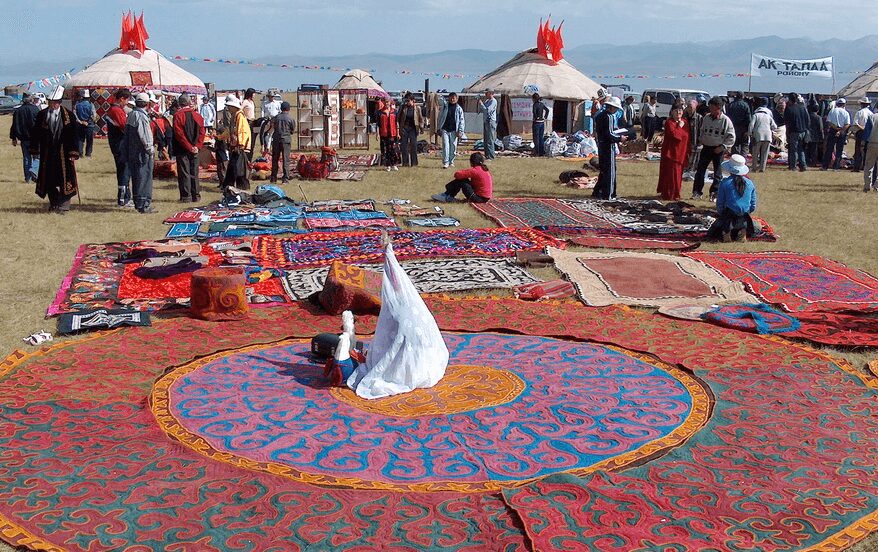
The atmosphere on the festival grounds is a unique blend of serious competition, deep cultural pride, and tourist buzz. It is chaotic, loud, and incredibly authentic all at once.
You won’t go hungry, as temporary restaurants are set up serving traditional Kazakh cuisine, Mongolian dishes, and even some Western plates. It is hearty food designed to keep you warm.
Here is a reality check: be ready to battle a crowd of photographers and tourists, especially during key competition moments. You have to elbow your way in for a good view.
Ready to witness this incredible bond between human and bird? The Golden Eagle Festival is truly a once-in-a-lifetime experience. It’s not just about the competition; it’s a deep dive into living history. So, pack your warmest clothes, book that flight to Ölgii, and get ready for an adventure you’ll never forget! 🦅✨ See you in the Altai Mountains
Q / A About the Golden Eagle Festival in Mongolia
So, what exactly is the Golden Eagle Festival?
It’s basically this incredible annual gathering in Western Mongolia where Kazakh hunters show off their skills. Think of it as a massive celebration of their heritage, organized by the Mongolian Eagle Hunters Association. It’s all about keeping the ancient tradition of hunting with golden eagles alive! 🦅
During the event, you’ll see hunters in traditional costumes parading on horseback and competing in various games. It’s not just about the birds, though; it’s a full-on cultural immersion with archery, horse racing, and goatskin tug-of-war games.
Is this the most famous festival in Mongolia?
While the Naadam Festival usually takes the top spot for the whole country, the Golden Eagle Festival is easily the biggest draw if you’re into unique cultural experiences in the west! It’s become super famous internationally, especially after that « The Eagle Huntress » documentary came out. 🎥
It attracts a ton of photographers and travelers every October. If you want something a bit smaller, there are also festivals in Sagsai in September, but the main one in Ölgii is the big show everyone talks about.
Where can I actually see these golden eagles in action?
You’ll need to head out to the Bayan-Ölgii province in the far west of Mongolia. The main festival happens just a few kilometers (about 7 to 14 km) outside the city of Ölgii, nestled right in the Altai Mountains. 🏔️
Since it’s pretty remote, you usually have to fly into Ölgii from Ulaanbaatar. Just a heads-up: flights and places to stay fill up super fast, so you definitely want to book months in advance!
What makes the golden eagle so special?
Oh, these birds are magnificent! We’re talking about the Aquila chrysaetos, which can have a massive wingspan of up to 2.5 meters. The hunters usually train females because they are larger, heavier, and have much sharper hunting instincts than the males. ✨
They can live for 20 to 30 years, but they usually only hunt with their master for about 6 or 7 years. After that, they are released back into the wild in a special ceremony to complete the circle of life.