

Hotel Rooms Type: The Complete Glossary to Accommodation Classifications
Understanding hotel rooms type is essential for both travelers seeking the perfect stay and hospitality professionals aiming to meet guest expectations. The hospitality industry uses a comprehensive classification system that encompasses everything from bed configurations to view categories and floor-based distinctions. This guide explores the various types of room in hotel with names, helping you navigate the diverse landscape of hotel accommodation options. This glossary would also be a perfect tool for hospitality students.
Hotel Rooms Type Glossary Takeaways
Understanding hotel room types is essential for making informed booking decisions and ensuring your accommodation meets your expectations. This comprehensive guide covers all aspects of hotel room classification, from bed configurations and suite categories to view types and floor-based distinctions.
Key points covered in this article:
- Complete breakdown of hotel bed types (single, double, queen, king, and extra beds)
- Detailed explanation of room categories from standard to executive
- Overview of hotel room view types and their impact on pricing
- Floor-based and location-based room classifications
- Practical guidance for choosing the right accommodation
For a quick visual reference, check out the infographics below that summarize all the hotel room types, bed configurations, and view categories at a glance.
Are you studying hotel management and want to keep this information handy? Download our comprehensive PDF guide on hotel room types for offline access and easy reference when booking your next stay.
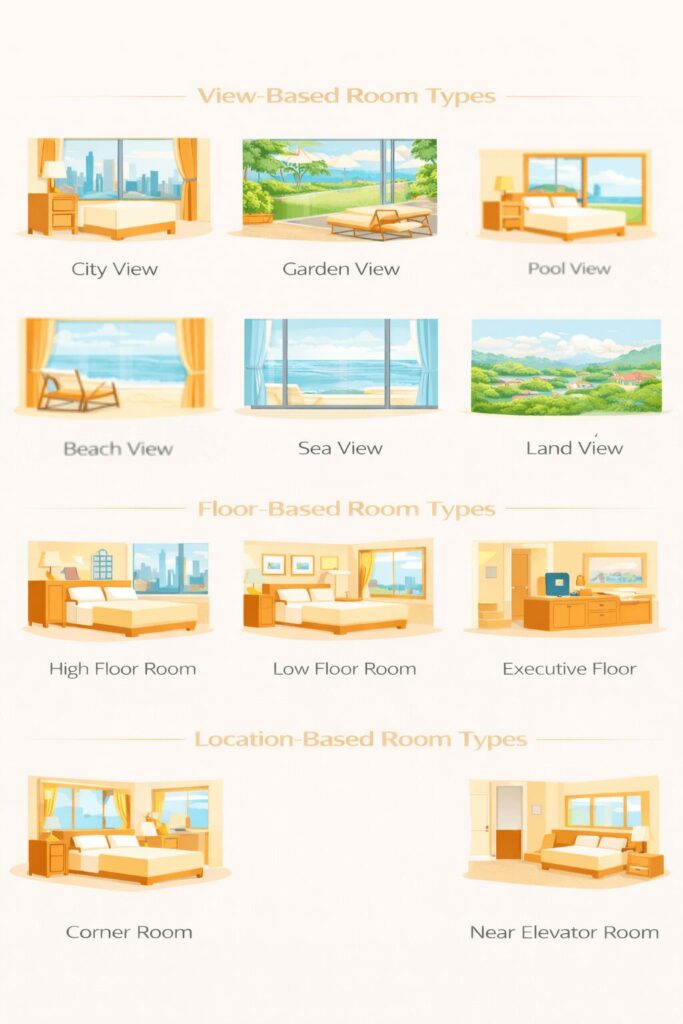
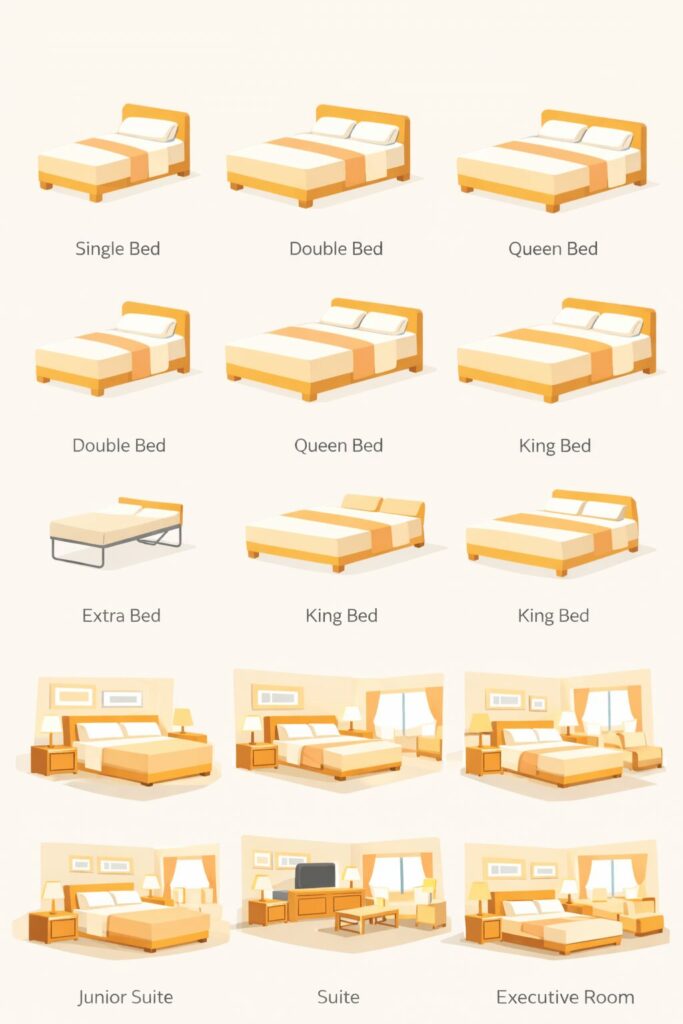
Table of Content
- Hotel Rooms Type: The Complete Glossary to Accommodation Classifications
- Hotel Rooms Type Glossary Takeaways
- Understanding Hotel Room Classification
- Hotel Bed Types: Understanding Sleeping Arrangements
- Types of Guest Room in Hotel: Category-Based Classification
- Hotel Room View Types: Location and Scenery
- Floor-Based Room Types: Vertical Classification
- Location-Based Room Types: Positioning Within the Property
- Hotel Bed Type Classification: A Deeper Look
- Hotel Bedroom Types: Design and Functionality
- Why Hotel Room Terminology Matters
- Choosing the Right Hotel Rooms Type
- Frequently Asked Questions About Hotel Rooms Type
Understanding Hotel Room Classification
The classification of hotel rooms goes beyond simple categories. Modern hotels differentiate their offerings based on multiple factors including size, amenities, location within the property, and the views they offer. This hotel room type classification system helps guests make informed decisions and ensures hotels can accurately communicate what each accommodation offers.
Different hotel room types are designed to cater to various guest needs, from solo business travelers to families and luxury seekers. Whether you’re looking at a budget-friendly standard room or an opulent presidential suite, understanding these distinctions helps set appropriate expectations and ensures guest satisfaction.
Hotel Bed Types: Understanding Sleeping Arrangements
Hotel Single Bed Definition
A single bed is designed for one person and typically measures 90-100 cm (approximately 36-39 inches) wide. This bed type is common in budget accommodations, single rooms, and European hotels. Single beds are ideal for solo travelers seeking economical options or when maximum occupancy in a room is required.
Hotel Double Bed Definition
When discussing different types of bed in hotel accommodations, the double bed represents a mid-size option. A double bed measures approximately 135-140 cm (53-55 inches) wide and accommodates two people, though more snugly than a queen bed. This size is particularly common as a standard offering in European hotels and represents a space-efficient option for couples.
Hotel Queen Bed Definition
The queen bed is one of the most popular hotel bed types in North America. Typically measuring 150-160 cm (60-63 inches) wide, it offers more comfort for couples compared to a double bed. Queen beds strike an excellent balance between space efficiency and guest comfort, making them a standard choice in superior and deluxe room categories.
Hotel King Bed Definition
The king bed is the largest standard hotel bed, usually measuring 180-200 cm (72-79 inches) wide. Considered the premium option for maximum comfort, king beds are often featured in deluxe rooms, suites, and luxury accommodations. This bed type is particularly favored by couples who prioritize sleeping space and comfort.
Hotel Extra Bed Definition
An extra bed is a movable or foldable bed added to a room upon request. Hotels typically charge additional fees for extra beds, which are subject to room capacity and availability. This flexible option allows families or groups to accommodate additional guests without booking separate rooms, though it’s important to note that extra beds may impact the room’s living space.
Types of Guest Room in Hotel: Category-Based Classification
Hotel Standard Room Definition
The standard room represents the most basic room category with essential amenities. These rooms are typically smaller in size with limited living space and offer the most economical option for guests. Standard rooms usually include fundamental furnishings such as a bed, basic seating, a desk, and a private bathroom. While they may lack premium views or additional space, standard rooms provide all the necessities for a comfortable stay.
Hotel Superior Room Definition
A superior room is a step above standard accommodations, usually offering either a larger space or better location within the property. These rooms may feature enhanced views, higher floors, or improved room positioning. The hotel room category list places superior rooms as a mid-tier option, offering better value than standard rooms while remaining more accessible than deluxe categories.
Hotel Deluxe Room Definition
Deluxe rooms are more spacious accommodations with enhanced amenities or upgraded views. This different room type in hotel classification often includes premium bedding, better furnishings, improved bathroom facilities, and more thoughtful design elements. Deluxe rooms may also feature additional seating areas, work spaces, or balconies, representing a significant upgrade from standard offerings.
Hotel Junior Suite Definition
A junior suite is a larger room with a partially separated sitting area. Unlike full suites, the sleeping and living areas in junior suites are not fully divided by walls or doors. This types of suite room category offers more space than standard rooms and provides a semi-suite experience at a more accessible price point than full suites.
Hotel Suite Room Definition
A suite is a premium room with fully separated living and sleeping areas. True suites offer additional amenities and higher privacy compared to junior suites, often including a separate bedroom, living room, and sometimes multiple bathrooms. Types of beds in 5 star hotel suites often include king beds with premium linens and may feature multiple sleeping areas to accommodate families or guests requiring extra space.
Hotel Executive Room Definition
Executive rooms are configured to accommodate multiple guests and are often equipped with extra beds or sofa beds. These rooms are designed for business travelers or families, offering enhanced work spaces, upgraded amenities, and often access to exclusive executive lounges with complimentary refreshments and business services.
Hotel Room View Types: Location and Scenery
Hotel Room City View Definition
Hotel room view types significantly impact guest experience and pricing. A city view room overlooks streets, skylines, or urban surroundings, providing guests with a vibrant urban perspective. These rooms are popular with travelers who appreciate the energy and architecture of metropolitan areas, offering views of city lights, landmarks, and bustling street life.
Hotel Room Garden View Definition
Garden view rooms overlook gardens, landscaping, or internal courtyards. These accommodations are often quieter than city view rooms, providing a more tranquil atmosphere. Garden views are particularly appealing to guests seeking relaxation, with greenery and natural elements visible from their windows, creating a peaceful retreat within the hotel property.
Hotel Room Pool View Definition
Pool view rooms face the swimming pool area and may involve higher noise levels during peak hours. While these rooms offer convenient visual access to the pool facilities and can be ideal for families monitoring children, guests should be aware that pool areas typically generate more activity and sound, especially during daytime hours.
Hotel Room Sea View Definition
A sea view room provides a partial or full view of the sea from the room. This highly desirable view type often commands premium pricing, as guests value the aesthetic appeal and relaxing atmosphere of ocean vistas. Sea view rooms can range from glimpses of water to expansive panoramic ocean views, with pricing typically reflecting the extent of the view.
Hotel Room Sea Front / Beach Front Definition
Sea front or beach front rooms offer direct, unobstructed views and immediate proximity to the beach. These premium-priced accommodations are typically among the most expensive room categories due to their exclusive positioning. Guests enjoy the convenience of beach access and the full sensory experience of oceanfront living, including sounds of waves and sea breezes.
Hotel Room Land View Definition
A land view room offers no specific scenic view and is often the most economical option. These rooms may overlook parking areas, service areas, or non-descript landscapes. While they lack premium vistas, land view rooms provide the same in-room amenities and comfort as other categories at a more accessible price point.
Floor-Based Room Types: Vertical Classification
Hotel High Floor Room Definition
High floor rooms are located on upper floors, offering better views and reduced noise from street-level activity. This hotel room type classification appeals to guests who prioritize quieter environments and panoramic perspectives. High floor accommodations often command higher rates due to their elevated positioning and the enhanced privacy they provide.
Hotel Low Floor Room Definition
Low floor rooms are located closer to ground level, offering easier access but potentially more noise from public areas. These rooms are ideal for guests with mobility concerns or those who prefer avoiding elevator waits. While they may be more convenient for quick access to hotel facilities, they typically sacrifice views and may experience more foot traffic noise.
Hotel Executive Floor Definition
An executive floor is a dedicated level offering upgraded amenities, lounge access, or business services. This premium hotel accommodation types category often includes exclusive check-in, complimentary refreshments, meeting spaces, and enhanced privacy. Executive floors cater to business travelers and discerning guests seeking additional services and a more exclusive hotel experience.
Hotel Club Floor Definition
Club floor accommodations represent a premium tier with exclusive privileges such as private check-in, complimentary refreshments, or concierge services. Similar to executive floors, club floors offer an elevated experience with access to private lounges, evening cocktails, and personalized services, justifying their higher price points.
Location-Based Room Types: Positioning Within the Property
Hotel Corner Room Definition
Corner rooms are located at the corner of the building and are often larger with multiple views. This advantageous positioning provides more windows and natural light, along with perspectives in two directions. Corner rooms frequently command premium rates due to their enhanced space and superior views compared to standard room positions.
Hotel Near Elevator Room Definition
Near elevator rooms offer convenient access but may experience higher foot traffic and noise. While these rooms provide the benefit of proximity to elevators and convenience for guests with heavy luggage or mobility limitations, they may be subject to more hallway noise, elevator sounds, and general guest traffic throughout the day and night.
Hotel Bed Type Classification: A Deeper Look
Understanding hotel bed type classification is crucial for both guest satisfaction and operational efficiency. In luxury properties, types of beds in 5 star hotel accommodations often include premium bedding with high thread-count linens, multiple pillow options, and mattresses from luxury manufacturers. The bed configuration can significantly impact room pricing and guest comfort.
Many hotels now offer bedding menus allowing guests to select firmness preferences, pillow types, and even mattress toppers. This personalized approach to sleeping comfort has become a differentiating factor among high-end properties competing for discerning travelers.
Hotel Bedroom Types: Design and Functionality
Hotel bedroom types vary not only in size and amenities but also in design philosophy and target demographics. Contemporary hotels increasingly segment their offerings to appeal to specific traveler profiles:
Business-oriented rooms feature extensive work areas, ergonomic chairs, strong lighting, and accessible power outlets. These accommodations prioritize functionality for working travelers.
Family-friendly rooms incorporate connecting doors, extra sleeping capacity, child-safe features, and sometimes themed décor. These different types of bed in hotel family rooms might include bunk beds or rollaway options.
Wellness-focused rooms integrate air purification systems, circadian lighting, fitness equipment, and healthy minibar options, responding to growing guest interest in maintaining wellness routines while traveling.
Accessible rooms comply with ADA standards, featuring roll-in showers, lowered fixtures, visual alert systems, and appropriate clearances for wheelchair users, ensuring comfortable accommodations for guests with disabilities.
Why Hotel Room Terminology Matters
Misunderstanding room and bedding terminology leads to guest complaints and negative reviews. Clear descriptions help set the right expectations, ensuring guests receive accommodations that match their needs and preferences. For hotels, proper classification of hotel rooms enables more effective inventory management, dynamic pricing strategies, and targeted marketing.
The hospitality industry’s standardized terminology creates a common language between properties and guests worldwide. When a traveler books a « deluxe king room with sea view, » they have reasonable expectations about the bed size, room quality, and what they’ll see from their window, regardless of the specific hotel brand.
For more hospitality, check out this glossary to understand sustainable hospitality words glossary.
Choosing the Right Hotel Rooms Type
When selecting among different hotel room types, consider several factors:
Purpose of travel – Business travelers may prioritize executive amenities and work spaces, while leisure travelers might value views and recreational access.
Party size and composition – Families require different configurations than couples or solo travelers, making understanding types of guest room in hotel classifications essential.
Budget constraints – Room categories exist along a pricing spectrum, with room type for hotel selections ranging from economical standards to luxurious suites.
Noise sensitivity – Consider floor level, proximity to elevators, and view types that impact ambient noise levels.
Mobility needs – Floor level and proximity to amenities matter significantly for guests with physical limitations.
Length of stay – Longer stays may justify upgraded rooms with more space and amenities, while brief overnight stops might not warrant premium categories.
Get more information about European Hotels Classification here.
Frequently Asked Questions About Hotel Rooms Type
What is the difference between a suite and a room in a hotel?
A hotel room is a single space that combines sleeping and living areas with a private bathroom, offering essential amenities like a bed, TV, desk, and basic furnishings. In contrast, a suite features physically separated spaces with distinct sleeping, living, and sometimes dining areas. True suites include a separate bedroom with a door for privacy, a living room with seating, and often upgraded amenities such as kitchenettes, wet bars, multiple TVs, and enhanced bathrooms. While standard rooms are ideal for short stays and budget-conscious travelers, suites provide more space, privacy, and luxury, making them perfect for families, extended stays, business meetings, or special occasions. The key distinction is that suites offer multiple functional rooms within one accommodation unit, whereas standard rooms combine all functions in a single space.
What is the difference between a double bed and a queen bed in hotels?
The primary difference between double and queen beds lies in their dimensions. A double bed (also called a full bed) measures approximately 54 inches wide by 75 inches long (137 cm x 190 cm), making it suitable for single sleepers or couples who don’t mind closer sleeping arrangements. A queen bed is larger, measuring 60 inches wide by 80 inches long (152 cm x 203 cm), providing an additional 6 inches of width and 5 inches of length. This extra space makes queen beds significantly more comfortable for couples, offering more room to stretch out during sleep. Queen beds are the most popular choice in North American hotels for double occupancy, while double beds are more common in European hotels and budget accommodations where space efficiency is prioritized. When booking, couples typically prefer queen beds for enhanced comfort, while solo travelers find double beds adequate.
Is a double room the same as a room with two beds?
No, a double room does not necessarily mean a room with two beds. The terminology can be confusing because « double room » refers to a room designed for double occupancy (two people), but the bed configuration varies. A double room might contain one double bed, one queen bed, one king bed, or two separate beds (either two doubles or two queens). The term « double » indicates the room’s occupancy capacity rather than the number of beds. To avoid confusion, hotels often specify the exact bed configuration in room descriptions, such as « double room with one queen bed » or « double room with two double beds. » When booking, always check the detailed room description or photos to confirm whether you’re getting one large bed or two separate beds, as this significantly impacts comfort, especially for non-couples traveling together.
How do I choose between a standard, superior, and deluxe room?
Standard rooms are the most economical option, offering essential amenities, smaller square footage, and basic views. They’re perfect for budget-conscious travelers who plan to spend minimal time in their room. Superior rooms represent a mid-tier upgrade, typically featuring either larger space, better location within the hotel (higher floors), or enhanced views compared to standard rooms. They may include minor upgrades like better furnishings or improved bathroom fixtures. Deluxe rooms offer the most significant upgrade among these three categories, providing notably more space, premium amenities, upgraded views, enhanced furnishings, and often additional features like balconies, seating areas, or luxury bathrooms. Your choice should depend on your budget, length of stay, and priorities: choose standard for brief stays focused on exploring outside the hotel, superior for moderate comfort at reasonable prices, or deluxe when you want to enjoy your room as part of your travel experience.
What does « junior suite » mean and how is it different from a full suite?
A junior suite is a larger room with a partially separated sitting area, but unlike a full suite, the sleeping and living spaces are not completely divided by walls or doors. Junior suites offer more space than standard rooms and typically include a designated seating area with a couch (sometimes convertible to a sofa bed), but everything remains within a single open space. Full suites, in contrast, feature completely separate rooms with doors providing true privacy between the bedroom and living area. Junior suites are priced between deluxe rooms and full suites, making them an excellent compromise for travelers who want extra space and some functional separation without paying premium suite prices. They’re particularly popular with business travelers who need a dedicated work space, small families wanting additional seating, or couples seeking a more spacious accommodation. Think of junior suites as enhanced rooms rather than true multi-room suites.
Why do some hotels have double beds instead of queen beds?
Several factors explain why many hotels, particularly in North America, offer double beds rather than queen beds in two-bed configurations. First, room size constraints often make it impossible to fit two queen beds comfortably—many hotel rooms simply aren’t large enough to accommodate two 60-inch-wide beds plus adequate walkway space. Second, convention and group travel demand drives the double-double configuration, as companies and meeting planners frequently request rooms that can accommodate two unrelated guests (colleagues, convention attendees) sharing accommodations to maximize room block efficiency and reduce costs. Third, construction era and hotel design play a role—older properties were built with smaller room dimensions before queen beds became the standard preference. Finally, cost considerations factor in, as furnishing rooms with double beds costs less than queen beds, and many hotels maintain double-bed inventory for budget segments. However, this is changing as guest preferences shift toward larger beds, and newer hotels increasingly offer queen beds even in two-bed configurations.
What are connecting rooms and when should I book them?
Connecting rooms are two separate hotel rooms positioned side-by-side with individual entrances from the hallway plus an interior door connecting them. This connecting door can typically be locked from both sides for privacy or opened to create a larger, multi-room space. Connecting rooms are ideal for several situations: families with children who want proximity while maintaining some separation, groups of friends who desire both social space and privacy, business colleagues attending conferences together, or anyone needing extra space without the cost of a suite. They offer flexibility that suites don’t provide—you can keep the connecting door closed for complete privacy or open it to create a shared living space. Connecting rooms typically cost less than booking a two-bedroom suite while providing similar space and more beds. When booking, specifically request connecting rooms rather than just adjacent rooms, as « adjacent » only means rooms near each other without the interior connecting door.