
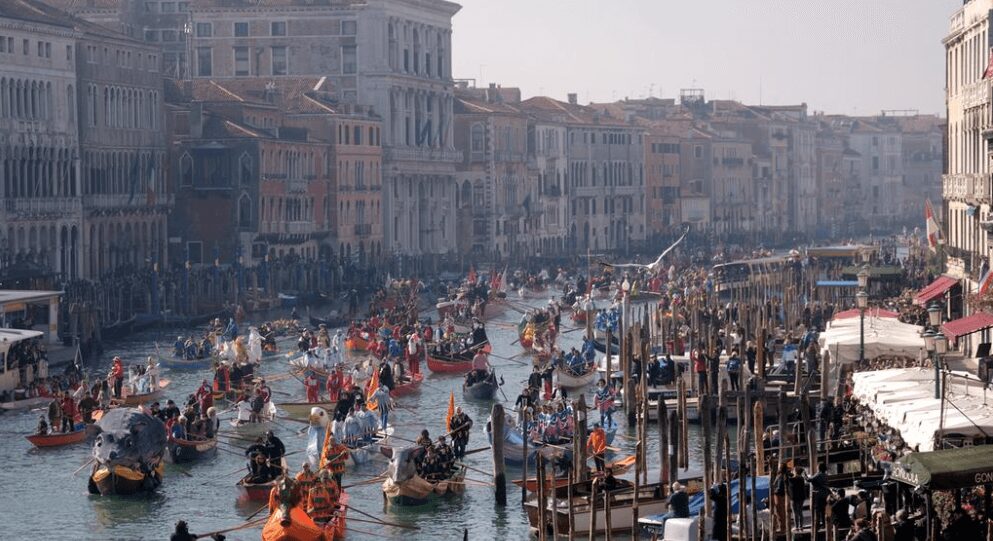
Overtourism in Venice: the reality behind the postcard
You’ve probably seen the chaotic photos of packed bridges, but have you realized that the massive overtourism in Venice actually destroying the city faster than the rising tides? 🌊 We’re stripping back the pretty postcard image to show you the gritty reality of a historic town turning into a hollow theme park and exactly why locals are fleeing in droves. 🎭 Stick around to discover the shocking hidden impact of your visit and the specific ways you can stop being just another number in the daily invasion. 🛑
Overtourism in Venice Article Takeaways
The bottom line: Venice is literally drowning under 30 million annual visitors, transforming a living city into a hollow theme park. This « Disneyfication » has pushed the local population below 50,000, leaving the city’s soul hanging by a thread. Saving this gem requires ditching quick day trips for slower, mindful travel that truly supports the remaining community.
Overtourism in Venice Article Table of Content
- Venice: Loved to Death? Let’s Talk Numbers
- So, how did we get here? The main culprits
- The Real Cost of a Postcard Picture: Life in a Tourist Hotspot
- More than just crowds: the silent erosion of Venice’s soul
- Fighting Back or Just Patching Holes? Venice’s Official Response
- Beyond the Headlines: The Venetian Resistance
- Your Turn: How to Visit Venice Without Being Part of the Problem
Venice: Loved to Death? Let’s Talk Numbers
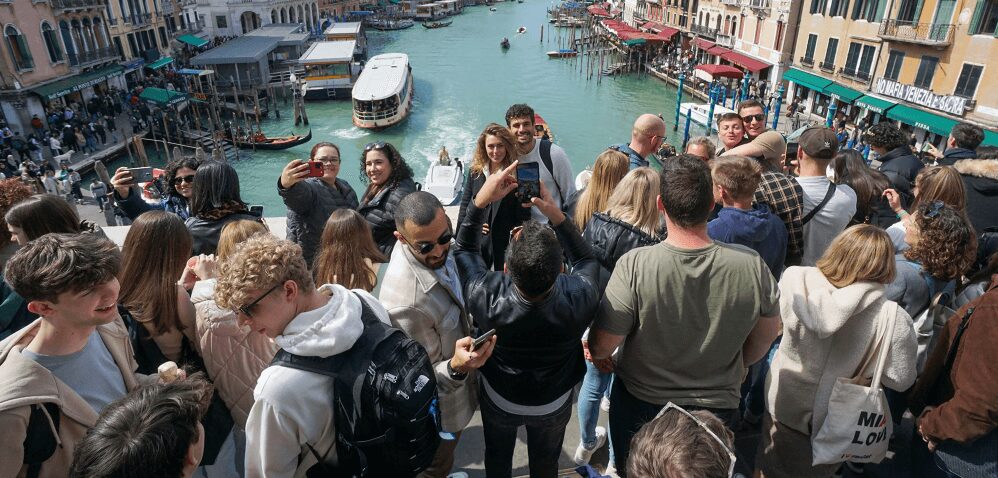
We are staring at a staggering 30 million tourists swarming the lagoon every single year, completely overwhelming the locals. When you compare that insane figure to the resident count, the imbalance is shocking. Most are just day-trippers who clog the streets, spend almost nothing, and vanish.
This translates to a crushing average of 60,000 visitors hammering the ancient pavement every single day. Tourist hotspots like St. Mark’s Square are permanently gridlocked, creating a suffocating pressure that never lifts.
You really have to wonder: is this situation actually viable for a fragile historic city? Think of it like a wild house party where thousands of guests crash, break the furniture, and never go home.
The Daily Invasion: A City Drowning in Tourists
The statistics regarding massive depopulation are enough to make your jaw drop to the floor. We plummeted from over 170,000 residents after the war to less than 50,000 today, which is just wild. It is almost impossible to believe a capital city could shrink this fast.
This is not a natural migration; it is a forced evacuation of the working class. The exploding cost of living and a brutal housing crisis driven by tourism are pushing everyone out. The situation in Venice is similar with what happen in another massive Mediterranean tourism spot in Catalunya: Barcelona is also facing an serious overtourism crisis.
Venice has lost over 120,000 inhabitants since the 1950s, leaving a demographic void. You can see the research from MIT that details this collapse. It is a slow-motion disaster for the community.
Where Did All the Venetians Go?
We are basically living in « Venice-land » now, a hollow shell of what used to be a republic. The city is no longer a place to live, but a mere attraction or postcard backdrop.
Residents feel like unpaid extras trapped in an open-air museum, constantly dodging selfie sticks. Their daily routine is hijacked by rude crowds and the impact of overtourism venice on their sanity is real.
This tragic transformation has a specific name: « disneyfication », and it is eating the city alive. It is a relentless process that empties the city of its authentic soul, leaving only a facade. 🎭
The City as a Theme Park: When Residents Become Extras
So, how did we get here? The main culprits
Alright, so the numbers are pretty grim. But how did a city like Venice end up in this mess? It wasn’t overnight. Let’s look at the main drivers behind this tourism overload.
The cruise ship conundrum
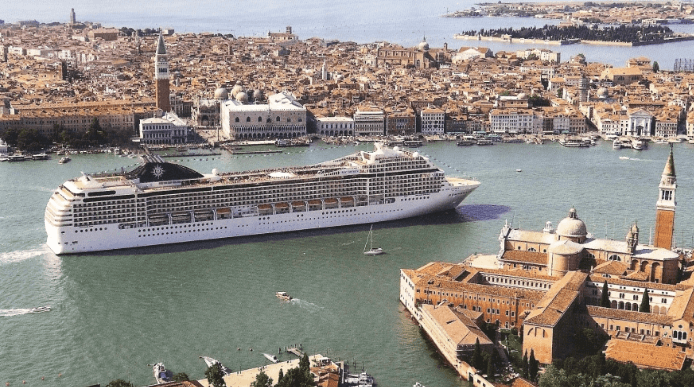
You have definitely seen the photos—massive steel giants towering over St. Mark’s Square, blocking out the sun. These floating skyscrapers are the most in-your-face symbol of the overtourism in Venice crisis.
Venice isn’t just a city; it’s a terminal dumping thousands of day-trippers onto the pavement all at once. They grab a magnet, maybe a gelato, and leave. Honestly, the local economy sees pennies compared to the chaos.
It gets worse when you look at the water. The wake from these ships causes serious erosion, damaging the lagoon ecosystem and infrastructure of a major European cruise port.
Airbnb and the hollowing out of neighborhoods
Then there’s the silent killer of community vibes: platforms like Airbnb. What used to be family homes are flipping into lucrative vacation rentals faster than you can say « check-out time. »
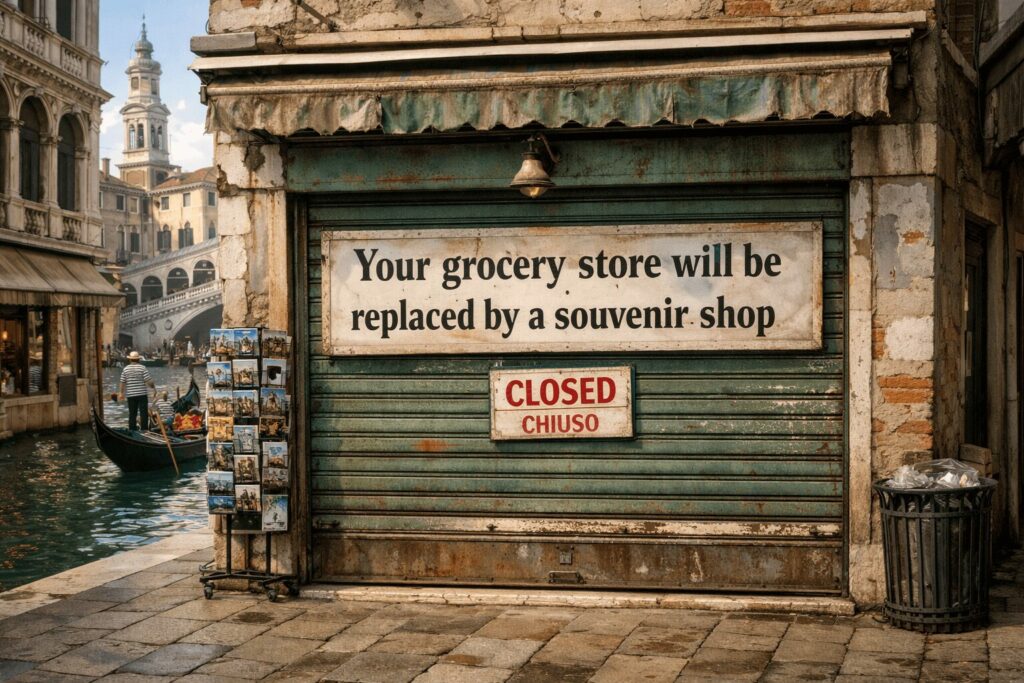
This gold rush drives rents through the roof, pushing actual Venetians to the mainland. One by one, the butcher and the baker get replaced by souvenir shops. It destroys the neighborhood’s soul, leaving empty shells behind.
The market is so broken that locals can’t buy homes anymore. It’s a tragedy for a city that needs residents, not just visitors, to survive.
The low-cost-flight boom: a double-edged sword
We can’t ignore the cheap tickets that made low-cost flights the norm. Suddenly, Venice became a quick weekend hop for millions, fueling the mass tourism fire.
It’s a paradox, right? Great for your wallet, but an absolute disaster for the city’s infrastructure. This model encourages « hit-and-run » tourism where people crowd the streets for a selfie and vanish without contributing much.
That easy access creates a relentless flow of people. Combine that with the ships and rentals, and you’ve got the perfect storm drowning the city.
The Real Cost of a Postcard Picture: Life in a Tourist Hotspot
So we know who to blame. But what does this actually feel like for the people who are still trying to call Venice home? Let’s get into the nitty-gritty of daily life.
The Vaporetto Nightmare: Getting Around Your Own City
Imagine trying to squeeze onto a Vaporetto, but you can’t move an inch because the deck is packed. Tourists are jamming the aisles with massive luggage, completely blocking the gangway for anyone else.
For a Venetian, this isn’t a scenic joyride. It is their actual commute to get to the office, buy food, or take their kids to school in the morning.
This saturation of public transport is a daily source of rage. It turns simple trips into a logistical nightmare, acting as a massive barrier to living a normal life.
From Bakeries to Souvenir Shops: The Death of Local Commerce
It’s a classic case of economic monoculture. When overtourism in Venice becomes the only game in town, useful shops like bakeries or hardware stores simply can’t survive the rent hikes.
Instead, they get wiped out by an army of souvenir shops. These places push cheap plastic masks and generic t-shirts made in China, killing the authentic vibe.
| The Venetian Streetscape: Then | The Venetian Streetscape: Now |
|---|---|
| Local bakery, hardware store, bookshop | Souvenir shop, fast-food pizza, mask store |
| Residents doing their daily shopping | Crowds of tourists blocking narrow streets |
| Quiet neighborhood evenings | Constant noise from rolling suitcases |
The Constant Noise: A City That Never Sleeps (and Not in a Good Way)
There is a sound that locals absolutely hate. It is the non-stop clatter of rolling suitcases banging against the cobblestones, echoing through the alleys at all hours.
Then you have the loud tour groups, drunk party-goers, and constant engine traffic on the canals. The resulting noise pollution is a serious issue that grates on your nerves.
Silence used to be part of the city’s charm, but now it is a rare luxury. This constant racket directly hits the quality of life, pushing residents to the breaking point.
More than just crowds: the silent erosion of Venice’s soul
It’s not just about the people, though. The city itself is paying a heavy price. This isn’t just an inconvenience; it’s a physical threat to Venice’s very existence.
The fragile lagoon under attack
The lagoon of Venice isn’t just water; it’s a delicate ecosystem hanging by a thread. The constant parade of boats, especially those massive cruise ships, churns up waves known as moto ondoso that are absolutely devastating.
These waves don’t just splash around; they erode the foundations of buildings and the banks, and they destroy seagrass meadows that are vital for keeping the lagoon balanced.
This degradation leaves the city wide open to flooding. It makes the infamous acqua alta phenomenon even worse, putting everything at risk.
Crumbling under our feet: infrastructure at its limit
Think about the physical toll on the city. Millions of feet pounding the ancient bridges and cobblestones every year accelerates the decay way faster than nature intended.
Fixing things in Venice is already a nightmare and costs a fortune. But overtourism venice adds massive financial and logistical pressure on aging infrastructure that’s already old and tired.
- Physical Damage to Heritage: Accelerated wear and tear on historic bridges, stone pavements, and building foundations.
- Lagoon Ecosystem Disruption: Erosion of salt marshes and seabeds from boat traffic, especially cruise ships, increasing flood risk (acqua alta).
- Pollution: Increased waste production and water pollution from the sheer volume of visitors and boat traffic.
The UNESCO warning: losing world heritage status
The situation is so dire that UNESCO has threatened multiple times to slap Venice on the list of World Heritage in Danger. That is a massive red flag for the city.
It basically means the world admits the city isn’t being protected right. In fact, UNESCO has warned that the damage could become irreversible if things don’t change fast.
Think of it as leaving a priceless Renaissance masterpiece to gather dust in a damp warehouse. If we lose this, it’s a loss we can never get back. 😔
Fighting Back or Just Patching Holes? Venice’s Official Response
The (In)famous Venice Entry Fee: What’s the Deal?
So, the city finally rolled out a €5 entry fee for day-trippers on peak days. It’s basically a ticket to curb overtourism venice style by discouraging those quick, hit-and-run visits. Ideally, it makes people think twice before crowding the lagoon.
Things are getting tighter next year, with the tax applying to more dates. You can check out the specific plans for 2025 to see how they’re ramping up the effort.
Critics aren’t buying it, calling it a « theme park entrance fee » that fixes nothing. Honestly, the whole system feels messy and doesn’t really stop the flood of people.
Kicking Out the Giants: The Cruise Ship Ban
They also banned massive cruise ships from the Giudecca Canal and St. Mark’s Basin. That’s a huge win for locals who’ve been fighting to get these monsters out.
But don’t be fooled; they aren’t gone for good, just rerouted to the industrial port of Marghera. It definitely saves the historic center from direct damage and ugly views. Still, the pollution is just moved next door.
While it’s a step in the right direction, it doesn’t solve the sheer volume of passengers. Thousands of folks still pour into the city, just from a different dock.
Taming the Herds: New Rules for Tourist Groups
Beyond the big ships, the city is trying to manage the chaos right on the streets. They need to stop the pedestrian traffic jams that drive residents crazy.
Now, guided groups are capped at 25 people, which is a relief. They also banned loudspeakers, so no more shouting guides echoing through the alleys. It’s all about cutting down the noise and clearing the bottlenecks.
- €5 Entry Fee: A daily charge for day-trippers on peak days.
- Large Cruise Ship Ban: Rerouting massive ships away from the historic center.
- Tour Group Limits: Capping guided groups at 25 people and banning loudspeakers.
- « Smart Control Room »: Using CCTV and phone data to monitor and potentially divert crowds.
Beyond the Headlines: The Venetian Resistance
But waiting for the government to fix things is a slow game. The real story, the one you don’t always hear, is how Venetians themselves are fighting to take back their city. This is where it gets interesting.
Not for Sale: The Locals Fighting to Stay
You might think everyone has left, but neighborhood committees like Ocio are digging in. They aren’t just holding signs; they are taking concrete action to reclaim their streets from the chaos of overtourism venice.
It’s a daily grind. These groups fight to keep basic services alive and stop homes from becoming hotels, pushing back hard against the suffocating monoculture touristique. They demand housing for people, not just profit.
Every resident who refuses to pack up and leave is performing a quiet, powerful act of résistance. Simply staying put has become their strongest weapon against displacement.
Building a Different Future: Meet the Venetian Innovators
Here is what 90% of visitors miss. Venetians are quietly building a real economy. Artisans are reviving traditional crafts, but they are pivoting to serve a conscious crowd rather than mass tourism.
Then you have the tech scene. Startups like Chiron Energy and ALKemist Bio are creating serious jobs that don’t rely on visitors. It’s a massive push for the réhabilitation de commerces.
This shift is vital. By focusing on tourism circular economy solutions, these innovators are proving that the city can survive without selling its soul to the highest bidder.
Fairbnb and Beyond: Ethical Alternatives Are Popping Up
If you must book a stay, check out Fairbnb. Born right here in Venice, this platform flips the script on the extractive rental model that’s killing neighborhoods.
Here is the genius part: 50% of their fees go straight back into community projects. Plus, strict rules ensure listings don’t cannibalize the residential market, keeping roofs over locals’ heads.
It proves we can travel without destroying the place. It challenges the grim reality of MIT’s research on the ‘consumed city’, showing that tourism can actually support the people who live there.
Your Turn: How to Visit Venice Without Being Part of the Problem
After reading about the chaos caused by overtourism in Venice, you might think skipping the trip is the only ethical move. But that isn’t the answer. The trick is becoming a better kind of guest. So, here is how you can enjoy the city and actually help it survive.
Think Beyond the Day Trip: Why Staying Longer Matters
The number one rule is simple: don’t be a « hit-and-run » excursionist. You really need to book a room and stay for at least a few nights.
Here is why that counts. Visitors who stay overnight spend way more cash in the local economy—think restaurants, hotels, and artisans—and you spread your impact over a longer time. It just adds up!
Also, traveling during the off-season, like autumn or winter, is a brilliant way to reduce the pressure. Plus, you get a way more authentic, moody vibe without the sweat. ❄️
Get Lost (The Right Way): Exploring Beyond St. Mark’s Square
You have to resist the urge to only check off the big three famous sites. Venice is honestly so much more than just the Rialto Bridge and St. Mark’s Square.
Instead, go explore the quieter, residential neighborhoods like Cannaregio, Castello, or the Giudecca. That is where you find the « real » Venice and see how locals actually live away from the madness.
Just stepping away from the main tourist arteries helps disperse the crowds. It instantly reduces the crushing pressure on those saturated areas we all complain about.
Spend Your Money Where It Counts: Supporting Local Artisans
Do yourself a huge favor and skip the cheap, imported souvenirs. Go hunt for the true local artisans who are keeping the city’s traditions alive.
When you eat, pick the « bacari »—those little local wine bars—and osterias where Vénitiens actually go. Avoid the tourist traps with menus in six languages! 🍷
- Stay Overnight: Avoid being a day-tripper. Overnight visitors contribute far more to the local economy.
- Travel Off-Season: Visit between October and April for a less crowded and more authentic experience.
- Explore Beyond the Hotspots: Discover neighborhoods like Cannaregio, Castello, and the Giudecca.
- Support Local Businesses: Buy from genuine artisans and eat at local-frequented « bacari » and restaurants, not tourist traps.
Venice is at a crossroads, and honestly, it needs our help. It’s not just a backdrop for selfies; it’s a real home for thousands. So, next time you visit, slow down, respect the locals, and travel with heart. Let’s keep the magic alive without killing the soul of the city! 🎭✨
Q / A About Overtourism in Venice
What exactly is overtourism in Venice?
It’s basically a situation where the number of visitors becomes too much for the city to handle. Imagine a historic city with fewer than 50,000 residents trying to cope with around 30 million tourists a year! It creates a « theme park » effect where streets are gridlocked, public transport is packed, and local life gets pushed out. 🎢
How many people actually live in Venice now?
The numbers are actually pretty scary. The historic center has lost a huge chunk of its population, dropping from over 170,000 after World War II to under 50,000 today. Locals are leaving because the cost of living is skyrocketing and apartments are being turned into vacation rentals. It’s a real struggle to keep the community alive. 📉
Do I have to pay an entry fee to visit?
Yes, in many cases you do. To stop the city from bursting at the seams, authorities introduced a €5 access fee for day-trippers on specific peak days. If you are just popping in for the day without a hotel reservation, you’ll likely need to pay. However, if you are staying overnight in the city, you are usually exempt since you pay a different tourist tax. 💸
Are huge cruise ships still allowed in the city center?
Thankfully, no! After years of protests, the government banned those massive cruise ships from sailing past St. Mark’s Square and through the Giudecca Canal in 2021. They were causing too much damage to the lagoon’s foundation and polluting the air. Now, the big ships have to dock at the industrial port of Marghera, away from the fragile historic center. 🚢
What are the new rules for tour groups?
If you are booking a guided tour, you should know that groups are now limited to a maximum of 25 people. This is to stop those massive herds from blocking the narrow streets and bridges. Also, guides are forbidden from using loudspeakers, which helps keep the noise down for the residents trying to live their lives. 🤫
How can I visit Venice without being part of the problem?
You can make a big difference just by how you travel! Try to stay for a few nights instead of just visiting for the day, as this supports the local economy much more. Also, try to visit during the off-season (like winter) and explore quieter neighborhoods like Castello instead of just hanging out at the main tourist spots. And please, buy from real local artisans! 🎭